Showing posts with label travel. Show all posts

Sunday, 4 December 2011

Images of old Lisbon that look as if they were taken somewhere in old Corfu Town

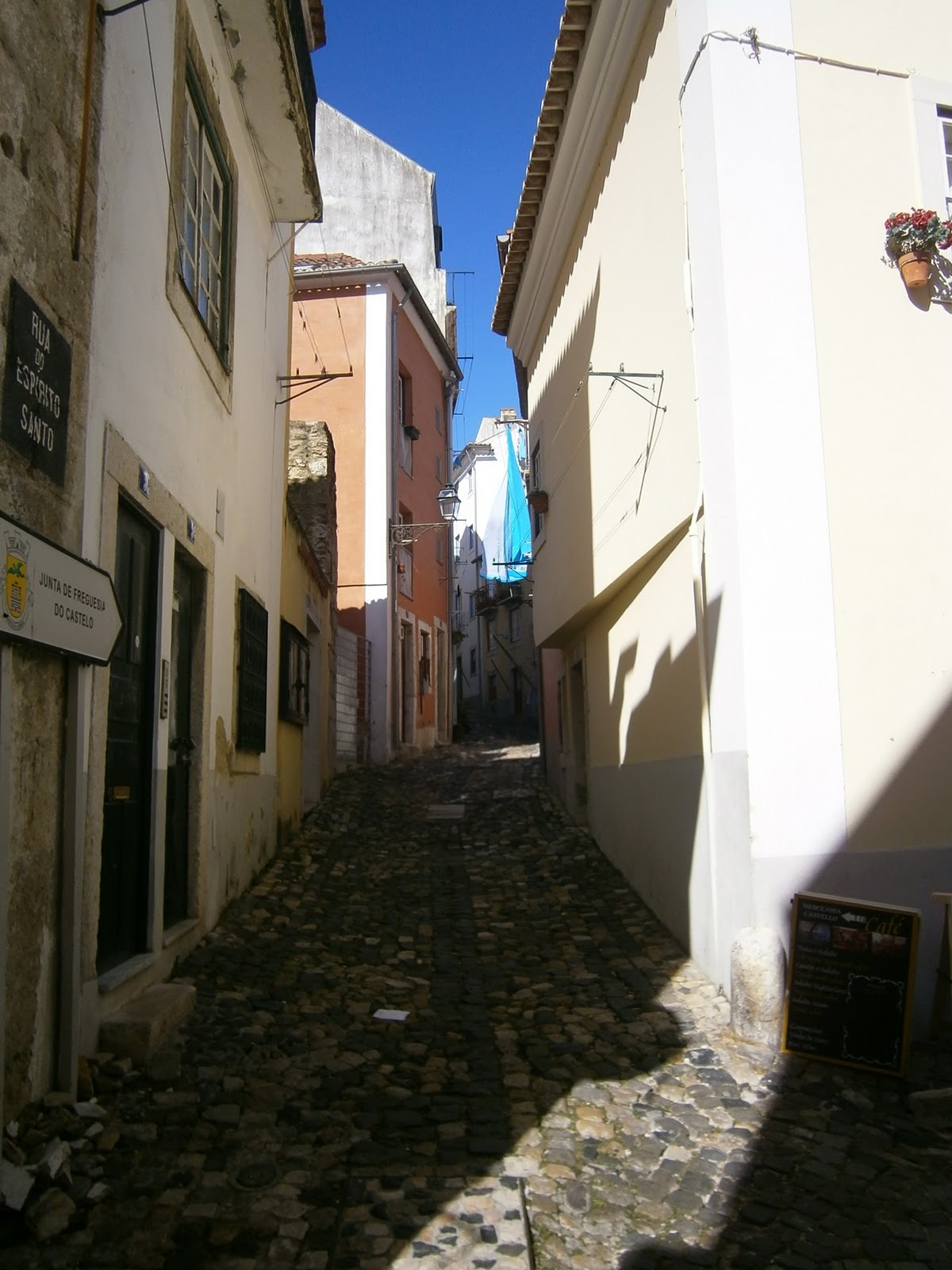
   Last month I spent a week in beautiful Lisbon. One thing that striked my attention was the endless similarities between the old "bairros" (districts) of the portuguese capital with the older parts of Corfu town. Lisbon was built on seven hills which overlook Tagus estuary. The streets in older parts like Alfama, Sé and Mouraria are narrow and mazy like those in the Campielo district of Corfu town. Most buildings are 3-4 storeys tall with roofs featuring red ceramic tiles similar to those found in Greece. Like what happens in Corfu, those medieval neighbourhoods are inhabited by elderly people who still hang their laundry to dry out of the window. Many buildings had been coloured with vivid mediterranean colours which look bright and warm under Lisbon's strong sunlight. 
   I would like to point out that, unlike Corfu, most of those medieval alleys are pedestrianized and access by car is only allowed to permanent residents. Streets are clean and most old buildings are being renovated thanks to program run by the municipal authorities. Also, the old districts are teeming with tourists all year round and few buildings are uninhabited or rundown. Another similarity I noticed was the abundance of those horrid tag graffiti which can be found in both places.
   Below there is a selection of photos I took from various old neighbourhoods like Alfama and Bairro do Castelo. I wish our municipal authority had visited Lisbon and inspired by the way how Lisbon residents and officials respect and take care of their town.




Thursday, 23 July 2009

The Durrell's "Daffodil Yellow villa" in Kontokali

Tourism in Corfu would have been different without the famous G. Durrell's novel "My family and other animals". Gerald Durrell lived during his childhood for a few years with his family in Corfu. He and his elder brother, Lawrence, quickly adored the sheer beauty of then unspoiled by the massive tourism, Corfiot landscape. He begun exploring the local flora and fauna and started connecting with some of the local people.


Durrells lived in many grand houses during their four year long stay in Corfu. One of them was the so called "Daffodil -Yellow villa" in Kontokali. Recently, I decided to go for swimming just outside the villa, which is still inhabited by a rich local family. Its premises are clearly visible from a good distance. It is four storeys tall and the perimetre of the premise is marked by a tall wall. The villa also is surrounded by a small pine forest in which various kinds of birds reside.
The villa has a venetian style. Probably it was a property of a venetian rich landlord who may have owned vast pieces of land around Kontokali in which olive trees have been cultivated(venetian Corfu had a feudal system - like most places in Europe in the Middle Ages and before the French Revolution.
In my opinion, this house is one of the most beautiful and splendid residences still standing in the island. It reminds us that Corfu was a place which many people from different cultures have been living together, enjoying the beauty and the quality that Corfu offered.


Saturday, 13 June 2009

Mirtiotissa beach, the official nudist beach of the island.

Mirtiotissa is located on the western coast of the island and is the official beach for the nudists of Corfu. Being hailed as one of the most fine beaches all over the world, the place surely is less developed than nearby cosmopolitan Glyfada. One can only find a restaurant and the Mirtiotissa monastery, from which the beach was named. Waters are usually colder than Glyfada or Kontogialos, because of the currents and the rocks which surround the beach. Access to the beach is a little bit difficult; the road is narrow, winding and pebbly but you are awarded by one of the clearest and most secluded beaches Corfu can offer.


Friday, 27 February 2009

Paleokastritsa: Where Ulysses first met Ariti

You probably all have heard of Paleokastritsa. This picturesque place situated 25 km from Corfu Town (map) is one of the most recognisable places in the island and in the whole Greece. A combination of sharp cliffs, beautiful coves, it is the place that some archeologists believe that this was the place Ulysees met Ariti when he had been washed out by the sea in the mythical island of Scheria. Just off Paleokastritsa, there is a rock sticking out from the sea, which is mythically believed that it is the Ulysses petrified boat or a petrified vessel which tried to pirate the nearby monastery.
The six coves of Paleokastritsa are named Aghia Triada, Platakia, Alipa, Aghios Spyridon, Aghios Petros and Ampelaki. Most coves have caves, in which someone can visit with his own boat and get amazed by the natural beauty of the place.

Let's begin our photografic tour then. Most pictures taken in March of 2005.

The main beach of Paleokastritsa. Note how blue the water is and how impressive are these cliffs.


Climbing up the cliff to the monastery. One can get amazing views of central Paleokastritsa from there.


And finally the monastery! It worths all the walk up the hill. Founded in 1225, Paleokastritsa Monastery is a typical sample of monastery architecture with cloisters.


There is also a small museum inside which includes a small collection of byzantine and newer ecclesiastical relics and also a huge skeleton of a whale which had been washed out from the sea.


Impressive views can also be offered from the monastery.


Back to the village. You can have a stroll by the sea or lay down and stare at the beautiful scenery which unfolds beyond your eyes.


And the best for the end: the famous Corfiot sunset! The next set of pictures speak for themselves!


Hope you got impressed by the place as I am.